
Get to Know: Jacquie Gering

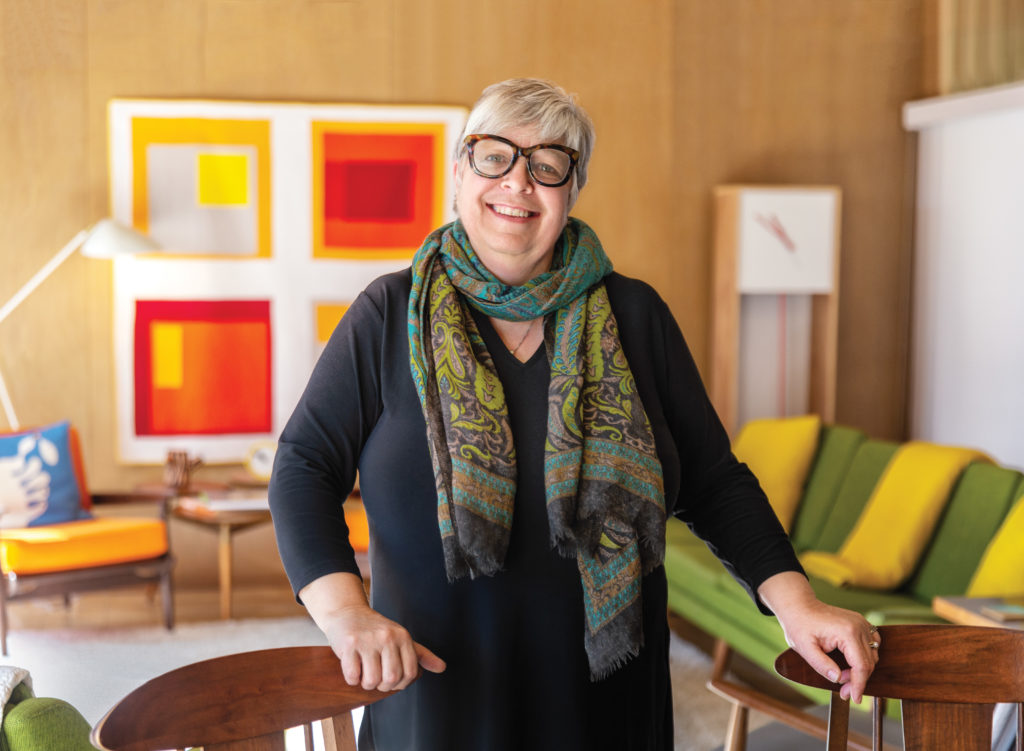
Jacquie Gering.
Jacquie Gering

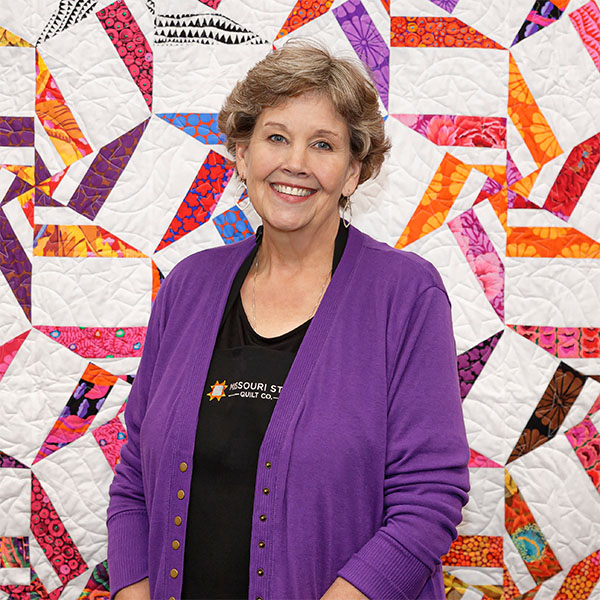
Meet Jacquie Gering, a modern textile artist based out of Prairie Village, Kansas. She began quilting in 2009 and her quilting style has evolved from first exploring traditional quilting to settling into her own way of creating that encompasses a modern, minimalist style that she works through today. 

We had an opportunity to ask Jacquie a few questions ahead of her special appearance on BLOCK Party on Thursday, March 18. Keep reading to get to know Jacquie, from her favorite tools to her history of sewing, and join us on Thursday to see her in action!

What is your favorite part of the quilting process?

Design is my favorite part of making a quilt, but design is a key component in almost every facet of making a quilt: creating the pieced design, choosing color and fabrics, choosing a quilting design and even that final design choice of picking the right binding or deciding to use facing rather than binding. 

Who are your favorite fabric designers?

I don’t really have many favorite fabric designers since I use almost exclusively solid fabrics when I make my work. The one shelf of prints I do have is filled with fabrics designed by Yoshiko Jinzenji. Her prints are unique in the fabric world. They are sparse yet graphic and they have always intrigued me.  I’ve been purchasing them since I started quilting in 2009, but it’s taken me years to figure out how her prints integrate with my aesthetic and how to use them effectively in my quilts.

What notion or sewing tool are you most dependent on?

The one tool that I couldn’t do without is my sewing machines. They are the workhorses in my studio.  I have a Brother Nouvelle 1500s which is a semi-industrial straight stitch machine that I use pretty much exclusively for piecing. It’s a beast. It sews fast with beautiful stitches and it never needs to go to the shop. It is simple to operate and to care for, yet it has the features that I require for good piecing: presser foot pressure adjustment, needle down, thread cutter, multiple feed dog settings and a knee lift. I love that it’s fast. My other machine is a Bernina 820 and it is always set up for quilting. I bought that machine so that I could quilt my own quilts. It has a large harp space to support quilting large quilts and it is sunk into the table so that my quilts are well supported when I quilt. It does more than it needs to for me and because of the level of complexity of the electronics it’s fussier than my Brother, but I take pristine care of it and have learned it inside and out and what it takes to make it work for what I need it to do. Both my machines are covered when not in use and they are cleaned and oiled regularly to keep them in tiptop shape.

How were you introduced to sewing and quilting?

The women in my family introduced me to sewing. They were all accomplished seamstresses.  My mother taught me to sew as a child.  She was my 4-H leader and tried her best to teach me the sewing skills she thought I might need. I was pretty much a failure in her eyes. I didn’t love sewing or making my own clothes and accessories though as the obedient daughter I did. I wasn’t very good at it and since I didn’t love it I abandoned it as soon as I could buy my own wardrobe. The women in my family quilted as well, but I didn’t really see it as interesting or special so I didn’t learn to quilt from them. I discovered quilting much later in life through the art world. I stumbled onto quilting after seeing the Gee’s Bend exhibit. I found those quilts intriguing and so different than the quilts I knew growing up. I bought a sewing machine and dabbled a bit. The timing was serendipitous. Quitting my current job corresponded with my discovery of quilting and on a whim I decided that quilting was the career I wanted to pursue. I fired up Google and taught myself what I wanted (needed) to know and I’ve been learning ever since.

What was the most frustrating sewing project you ever worked on?

I’m not sure I can say. Frustrating is an odd choice of words for me. In fact, I looked it up because something felt weird about it. Frustrated is “feeling or expressing distress or annoyance, especially because of the inability to change or achieve something.” Some pieces challenge me and some are abject failures, but that’s all part of the process. I always feel like change is an option for any piece I make. If something’s not working I change it whether it be design, fabric or technique. Failure is how I learn. Some pieces get started, abandoned and may get resurrected and live in a new form in the future. Some are still in the closet. I may have learned all I can from them at this point. 

What do you do to find inspiration/encourage your creativity?

I know that this is a trite thing to say, but inspiration is everywhere; you just need to look for it and recognize it.  I get inspiration from design concepts like line or space and concepts like pressure or flow or from events in my own life or in society in general. I consciously teach myself to slow down and notice and to think about, study and explore those things around me. I could have enough design fodder for my entire quilting career simply from exploring the concept of line. Sometimes I’m overwhelmed with too much inspiration and I have to focus and try to sustain myself in one place. I’m a starter and I jump to shiny pieces of inspiration to start new projects rather than finishing or deeply exploring where I currently am working.

What occupation would you like to try if sewing/making wasn’t an option?

If quilting weren’t an option I’d be exploring some other area of art or design. I love designing in my own home. I’m a gal with a power tool and I’m pretty good at paint, drywall, wallpapering and tiling. My husband and I have renovated every home we’ve lived in. We designed and built our own home out in the Kansas countryside. It was so much fun since I got to make every decision that went into that house from designing the placement of the electricity to the kitchen. We’ve moved six times since 2013 and every time I move into a new place I get to play interior designer. 

Who is your favorite fictional character?

Cookie Monster is my favorite fictional character. Cookie Monster lives his passion. I admire that. He’s also curious and asks questions when he doesn’t understand. He’s the opposite of a know it all. He’s also a great example of what’s on the outside is not necessarily what’s on the inside.

What fabric have you been hoarding the longest?

I don’t hoard fabric. I use it. Nothing that I own is so precious that it won’t go in a quilt someday.  I do have one piece of fabric from 2015 that I still have that is special. It was a piece of Yoshiko Jinzenji fabric that I bought at QuiltCon and she signed it for me. Of the few yards of that print that I purchased I have about 8″ left and that 8″ has her signature. I should probably frame it for my studio. When I first started quilting I didn’t have any idea how to buy fabric or what to buy so if I saw it and liked it, I bought it. I made loads of buying mistakes those first few years and ended up with fabric that I didn’t want to use. As I figured out who I was as a quilter, I set about reducing my stash and developing a more curated collection of fabrics. I don’t have a gigantic stash any more. Too much fabric overwhelms me. 

Describe your perfect day.

My perfect day would be spent with my husband in New York City. We love the energy, diversity, and opportunities of the city. I’m sure it would be spent with time at the MOMA or Guggenheim or some other museum, music or dance venue with time to explore and walk a neighborhood or read a book in the park with a good dose of people watching and of course there would be coffee, a great bottle of wine, friends and food, delicious food.

We can’t wait to have Jacquie join us on Thursday, March 18th at 6:00 pm cst for our BLOCK Party!

You can keep up with Jacquie by following her on Instagram and Facebook. Don’t forget to swing by her website, www.jacquiegering.com, and blog, too!
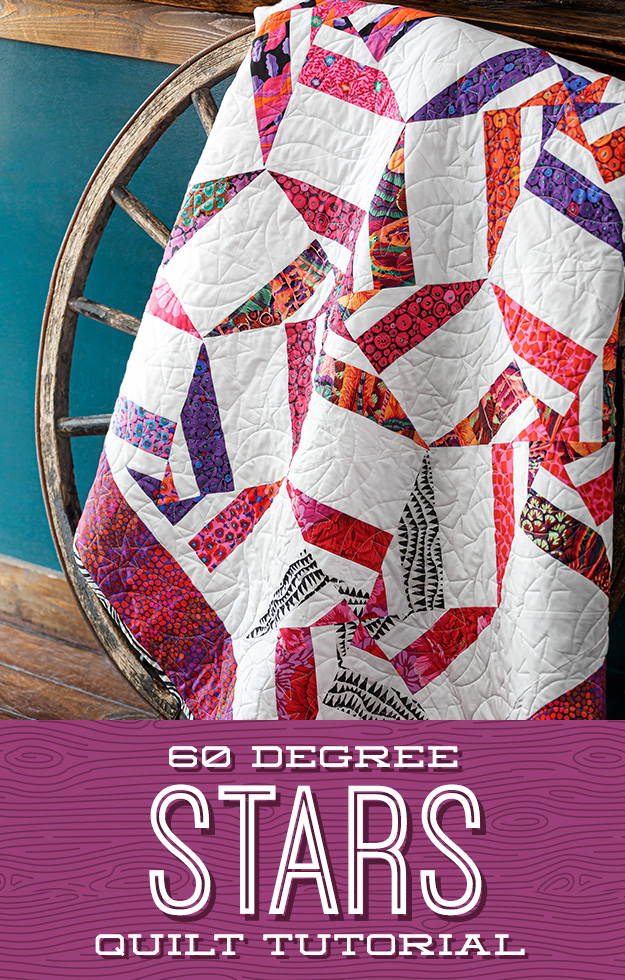
60 Degree Stars Quilt

The 60 Degree Stars Quilt from Missouri Star Quilt Co.

The closest star in the night sky is about 25 trillion miles away, give or take. If you plan to visit, be sure to pack a lunch; it will take 75,000 years to arrive. Of course, if you’re short on time, you can create your own gorgeous stars at home!

The 60 Degree Stars Quilt from Missouri Star Quilt Co.

This week Jenny is stitching together a breathtaking star quilt made with jelly rolls and the Missouri Star Equilateral 60 Degree Triangle Ruler. 

This pattern produces very little waste, and the bits of extra are used to make a fun, pieced strip for the back of the quilt!

Watch the Latest Tutorial from Missouri Star Quilt Co!

Jenny Reminisces on the History of Missouri Star Quilt Co.

What comes to mind when you hear the word “home”? To me, home is family. I can always be myself with them. Home is comfortable, it’s welcoming, it’s my happy place. Over the past year, we’ve all spent a lot more time at home, but the time is soon coming when we’ll be able to venture out again and I hope to see you before too long in my hometown. You’re always welcome in Quilt Town, USA. We have so much to be thankful for and so much to celebrate during National Quilting Month! We want you to know that wherever you are, you can always come home to quilting at Missouri Star. 

Looking back on that first quilting tutorial, it’s incredible to see how far Missouri Star has come. There I was, stitching with my home sewing machine and the iron I’d used for years, sitting down (because I’d broken my foot!), and teaching a simple 4-patch block using a jelly roll. I had no idea what the future held for our tiny company. Twelve short years later, many wonderful milestones have been reached thanks to your support and love of quilting. Let’s take a look back at all the steps that have led us to where we are today (click on the links to learn more or for some major throwback nostalgia!):

November 2008-Missouri Star Quilt Co. Founded
November 2008-First Longarm Quilting Machine
February 2009First Video Uploaded to YouTube
February 2009-First Purchase Made at Missouri Star
April 2011First Building Renovated
July 2012-Grand Opening of Missouri Star Main Shop
January 2013-Missouri Star Website Launched
August 2013-First 100,000 Subscribers on YouTube
October 2013Sewing Center Opens for Retreats
December 2013Sew Seasonal Opens
February 2014-First Issue of BLOCK Magazine Published
April 2014Penney’s Quilt Shop Opens
May 2014Missouri Star Mercantile Opens
July 2014First Shipping Warehouse Opens
November 2014Batik Boutique Opens
May 2015-Missouri Star Owners Awarded Small Business Persons of the Year Award
March 2015Licensed to Sew Opens
September 2015First Birthday Bash Celebration (Our 7th Birthday!)
October 2015Backing & Trims Shop Opens
November 2015Machine Shed Opens
December 2015Modern Shop & Kids & Baby Shop Opens
February 2016Man’s Land and Floral Shop Opens
June 2016Main Shop Grand Reopening 
April 2017First Missouri Star Live Facebook Video
May 2017-First Missouri Star Academy
June 2017-New Shipping Warehouse Finished
May 2018Missouri Star Named One of Forbes’ Best Small Businesses of the Year
May 2018-First Jenny on the Road Tour
August 2018-First 500,000 Subscribers on YouTube
July 2019-Missouri Star & NCMC Apprenticeship Graduation
August 2019-Missouri Star Theater & Education Center Opened
October 2019-Missouri Star Cares Charity Founded
Coming Soon! Spring 2021-Missouri Star’s Grand Reopening!

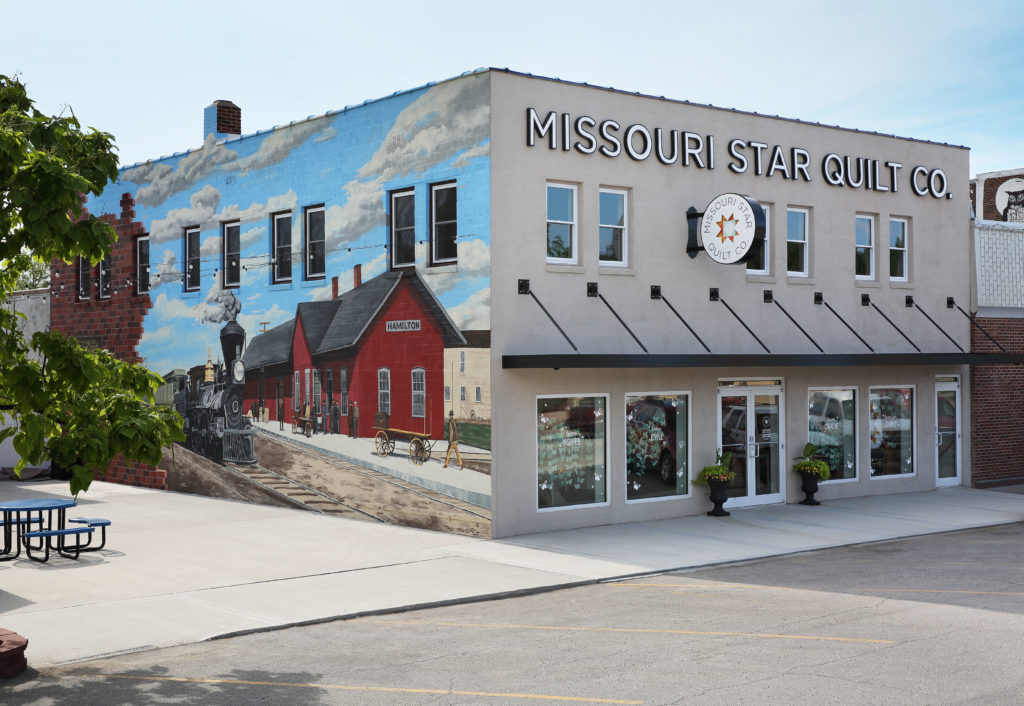
Now, our hometown has been revitalized. Strolling down the streets is a joy as I walk past thoughtfully restored quilt shops filled with beautiful fabrics, bursting with inspiration for quilters of all kinds. It was not what I originally had in mind. It’s so much better. 

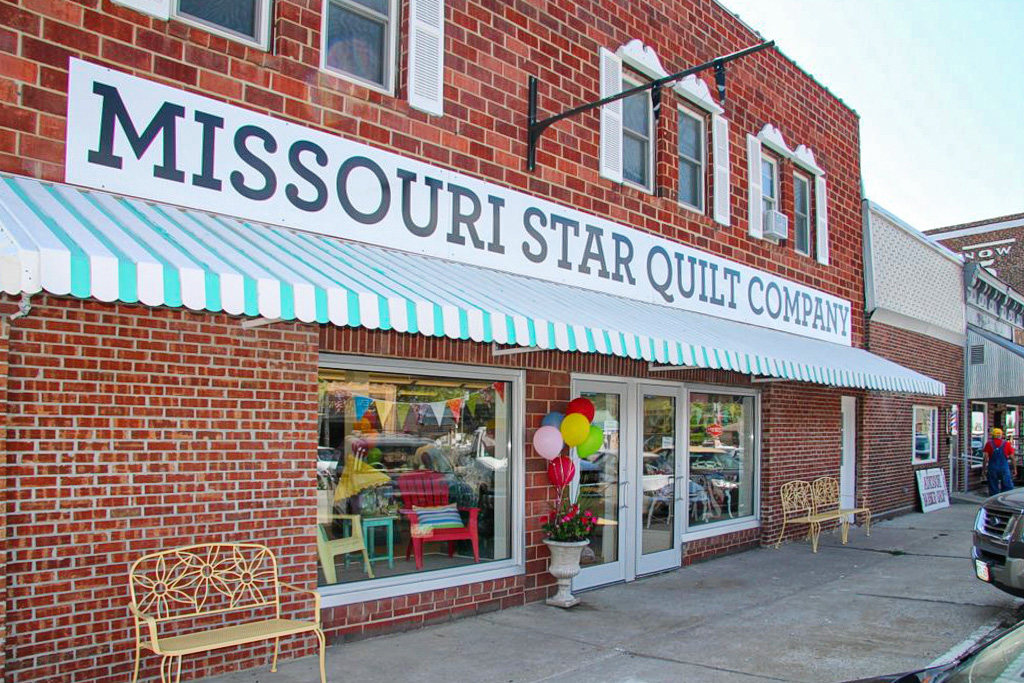
The quilt shops came about in an interesting way. Over a decade ago, we had just one little brick shop, but then we started selling many different types of fabric and we thought it would be a good idea to group them by style. So, the individual quilt shops came about naturally. The main street in town had many empty storefronts and we have fixed them up one by one to house each different fabric collection. All our lives, we never had the money for a brand new house, but we had plenty of fixer uppers. My kids took on this project with enthusiasm because they weren’t afraid of these old buildings. And look at what they’ve become!

Thank you for your loving support over the years. We are constantly amazed at what our little hometown has become, a literal Quilt Town, USA! And it’s all possible because of you. We hope to welcome you back very soon. 

Love,

Jenny

Lady of the Lake Quilt

Once upon a time, the Lady of the Lake emerged from the waters of Avalon to bestow a magical sword on young King Arthur. Arthur took that sword to war and…was mortally wounded. What a shame! What if she had given him a fancy new sewing machine instead? Just imagine the quilts he could have made! 

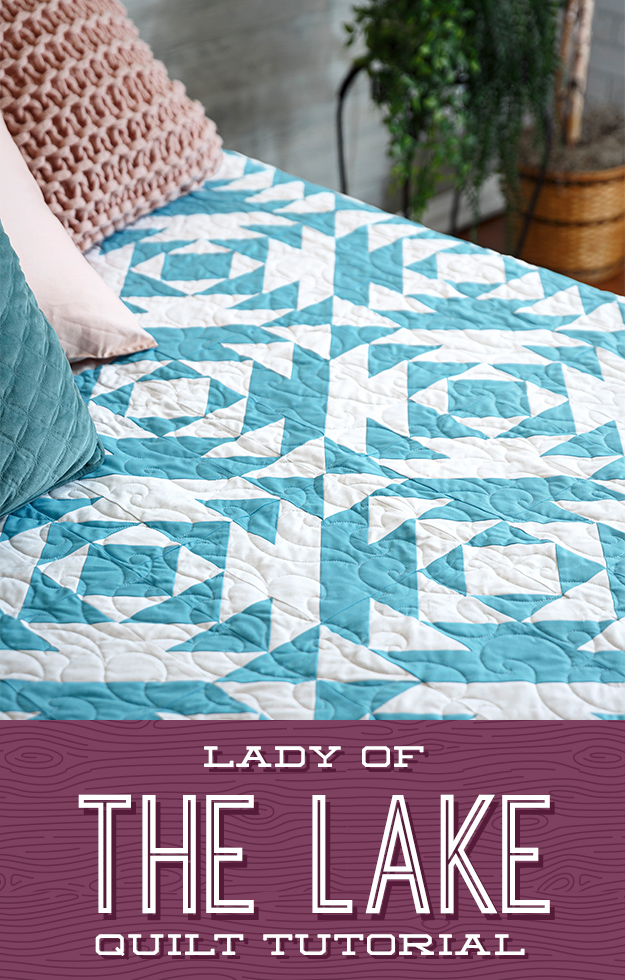
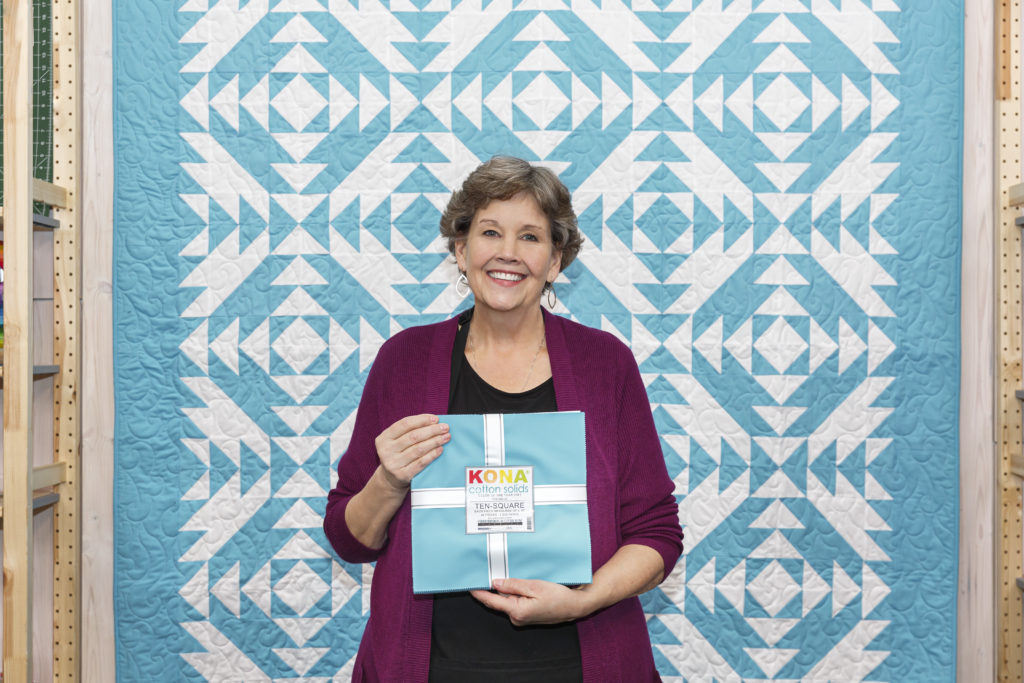
The Lady of the Lake quilt pattern is an old-fashioned favorite made entirely of half-square triangles. Jenny used layer cakes in bright white and “Horizon,” the 2021 Kona Color of the Year to create a two-color quilt that is lovely as a fairytale! Click HERE to watch the tutorial! 

Watch the Latest Tutorial from Missouri Star Quilt Co!

A Brief and Incomplete History of Quilting

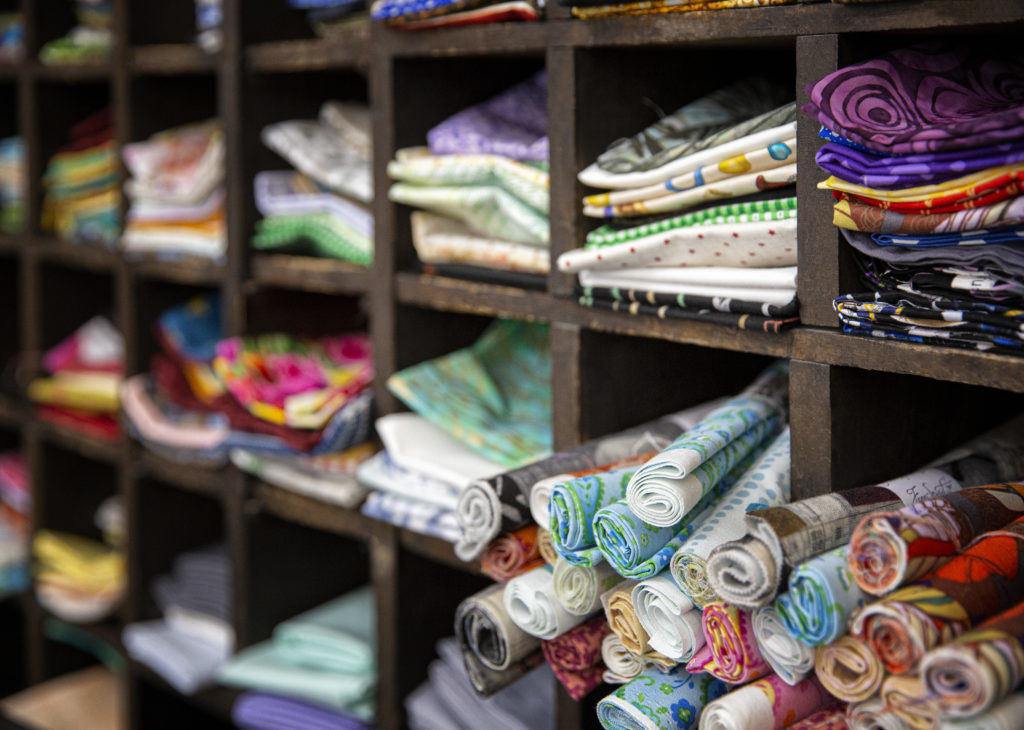
Fabric stored and organized for the purpose of quilting.

As we begin to celebrate National Quilting Month, it is important to look back upon our history and appreciate how the art of quilting has evolved throughout our past. Each of us has a special responsibility as a quilter (whether you realize it or not!); we are tasked with keeping an ancient art form alive and well and with every stitch of fabric, we’re sewing the threads of the craft’s future. Whether you learned how to quilt in the traditional way of having the skill passed down from previous generations, or if you’re just finding your way today in a new world of online innovation, you’re now bound within the fabric of your creations. Take some time to celebrate National Quilting Month today and learn a little more about the History of Quilting.

Quilting has a long and storied history stretching back as far as ancient Egypt, piecing together a timeline of humanity from which we draw our crafting skills. While the quilting we know and love today is worlds different from the functional quilting of our past, it still holds a unique place in our hearts and in our history. For generations we’ve warmed ourselves and our families beneath quilts. They’ve been there to protect us, remind us of our past, and comfort us in difficult times.

While it’s not possible to capture the complete history of quilting in one attempt (and we’re by no means experts on the subject!), this guide can serve as a very broad overview of our craft—a guide to remind you that with every stitch you create, you create a stitch within the fabric of time. Many cultures in our world have used quilting as a means to document their history, survive harsh environments, and bring comfort during times of strife. For generations, careful hands have passed down their gifts until they have finally reached us and it is now in our hands to continue the quilting journey. Looking back on our past may be important, but it’s the quilters of today that will keep our craft alive.

Early Beginnings

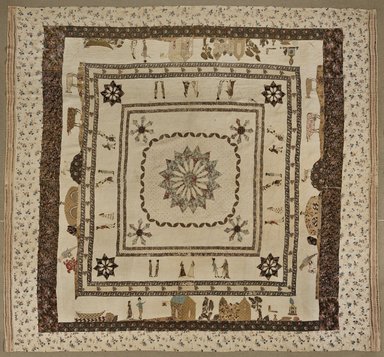
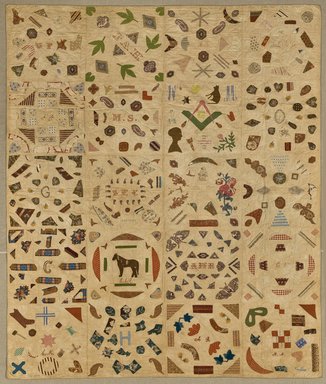
Pictorial Quilt, 1795. Linen, multicolored thread, 103 1/4 x 91 in. (262.3 x 231.1 cm). Brooklyn Museum, Dick S. Ramsay Fund, 41.285

Quilting can be traced back to many ancient civilizations within China, North Africa, and the Middle East. An ivory carving depicting the Pharaoh of the Egyptian First Dynasty wearing a quilted mantle, now housed in the British Museum, is recognized as the first known evidence of quilting. During these time periods, the concept of quilting wasn’t all that different than how we see it today. Many original quilted goods were created out of necessity. Many layers “sandwiched” together created a warmer, thicker product that was handy in many different uses. Clothing to both warm and protect the wearer (even to pad the armor of knights!) and bedding was made by quilting different layers of fabric together.

Medieval Europe offers some of the clearest glimpses into the early history of quilting. As with many creative processes, quilting was utilized as a method of storytelling as well as a functional necessity. As cinema has given us the opportunity to visualize a story, early quilts allowed the creator to embellish and decorate with stories from both written and oral traditions. Two of the earliest known decorative quilts are from the 14th century and both capture the legend of Tristan and Isolde. Quilts throughout history have been used and created as both functional vessels of warmth and beautiful works of art.

Quilting Comes to America

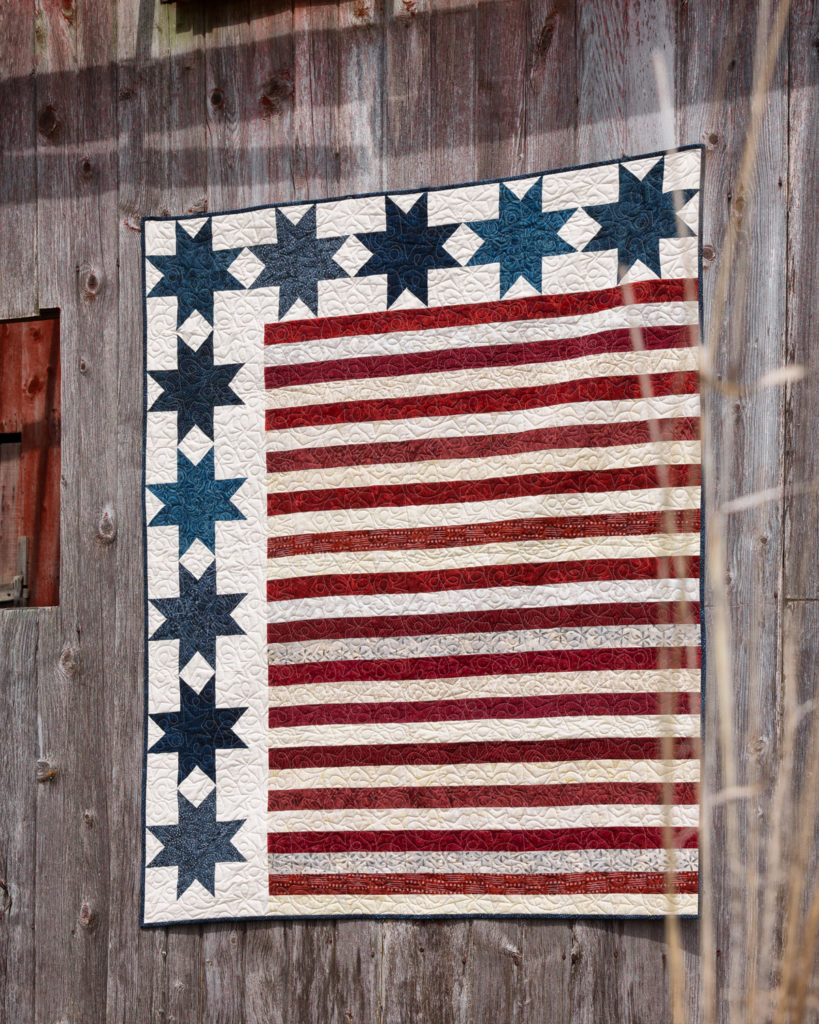
The Stars and Stripes quilt from the Missouri Star Quilt Company.

Practicality was key for early American settlers. In a new environment, isolated from the known world, quilts found their purpose in the form of warmth. Most of the early American quilts were not focused on aesthetics, but rather were created from the limited resources available. They used whatever materials they had on hand, recycling outgrown and damaged clothing (and at times, even other, older quilts!) into new quilts. These quilts were purely for functionality and keeping warm.

If protection from the elements wasn’t beneficial enough, quilting developed another function in early colonial America—social interaction. As we all know, quilting is no easy task. The laborious process is well-loved by many, but before modern revolutions such as pre-cut materials and sewing machines, quilts had to be made entirely by hand.

Pictorial Quilt, ca. 1840. Cotton, cotton thread, 85 1/2 x 67 3/4 in. (217.2 x 172.1 cm). Brooklyn Museum, Gift of Mrs. Franklin Chace, Gavin Ashworth photograph

The quilting bee, a social gathering where women came together to socialize and quilt, was a way for many early settlers in America to not only continue working on their projects, but  interact with their community and have fun while sewing during the long process! For many, quilting was a relaxing activity and something to look forward to, especially when able to gather with their fellow quilters. These social gatherings, along with sewing at home, allowed the opportunity for quilting to be passed on as a generational skill. Mothers would teach daughters the basic stitches and then in turn, would pass those skills on to their children, creating a lifetime of heirloom quilts with nostalgic memories layered within the fabric. Quilting became a popular activity for major life events in which entire quilts were completed within a day due to limited time with neighbors whom early settlers might have only seen a few times a year. The Victoria and Albert museum states, “particularly in north America … there is a tradition of a quilt-making ‘bee’ for a girl about to get married, with the aim of stitching a whole quilt in one day”.

These gatherings and the first boom in quilt popularity gave birth to many of the vintage blocks that we still use and gain inspiration from today. Early American crafters, much like the earliest quilters, told stories with their projects by sewing the world around them. The pinwheel block utilizes motion, demonstrating the prairie winds of which they traveled. Star blocks captured the night sky and the importance of light in a vast, unexplored wilderness. These blocks have been passed down for centuries until they became the staples of quilting that we know and love today.

Modern Quilting

The Sunset Cabin quilt from ModBLOCK Volume 5.

Today, quilting is more accessible than it ever has been. We live in a world of pre-cut fabrics available at the press of a button and instructional videos that can be watched online from the convenience of our homes. Quilting isn’t entirely a necessity as it once was, we can instead use it as a creative outlet and pastime.

The world of quilting continues to change as the world we live in evolves. Modern quilting utilizing bold color designs and prints, once an impossibility due to limited technology and supplies, has brightened the artform in unimaginable ways. Geometric and fractal quilting are growing in popularity as a new generation of quilters piece their first works, many of which have learned their craft online rather than through the traditional in-person learning process. As the world changes, so does quilting. Regardless of what the quilts of tomorrow look like, we can remember where they came from and keep their memory alive within our patchwork. So pick up an old pattern today and try something new— replace the background with a bold, modern color or add some abstract designs into your block but remember that with every stitch, you’re continuing the timeline of quilt history.