After months of planning, sewing, and wrapping, you’ve created real magic this holiday season. I’m so proud of you!
Now it’s time to kick up your feet and rest. Treat yourself to a cup of peppermint cocoa and a warm soak in the tub.
You know, quilters love to give and serve. But sometimes we forget to take time for ourselves. So every Christmas, Jenny plans a special project meant just for YOU.
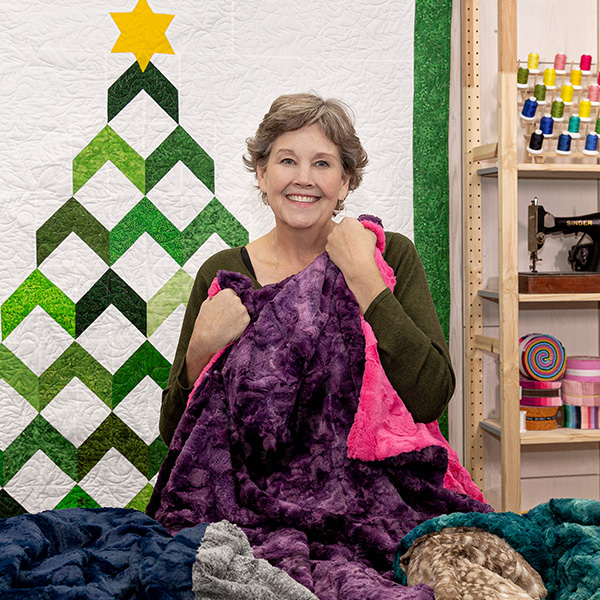
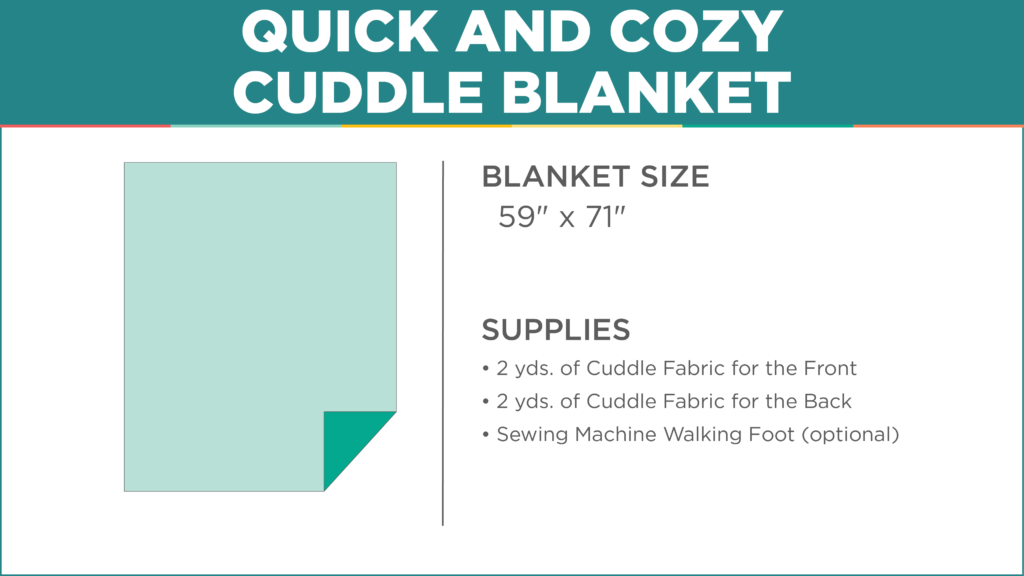
This year, she is using Shannon’s Cuddle® Cuts Minky 2-Yard Cuts to make a quick and easy throw blanket that is so luxuriously soft, you can wrap it around your shoulders and relax like the quilting royalty you truly are!
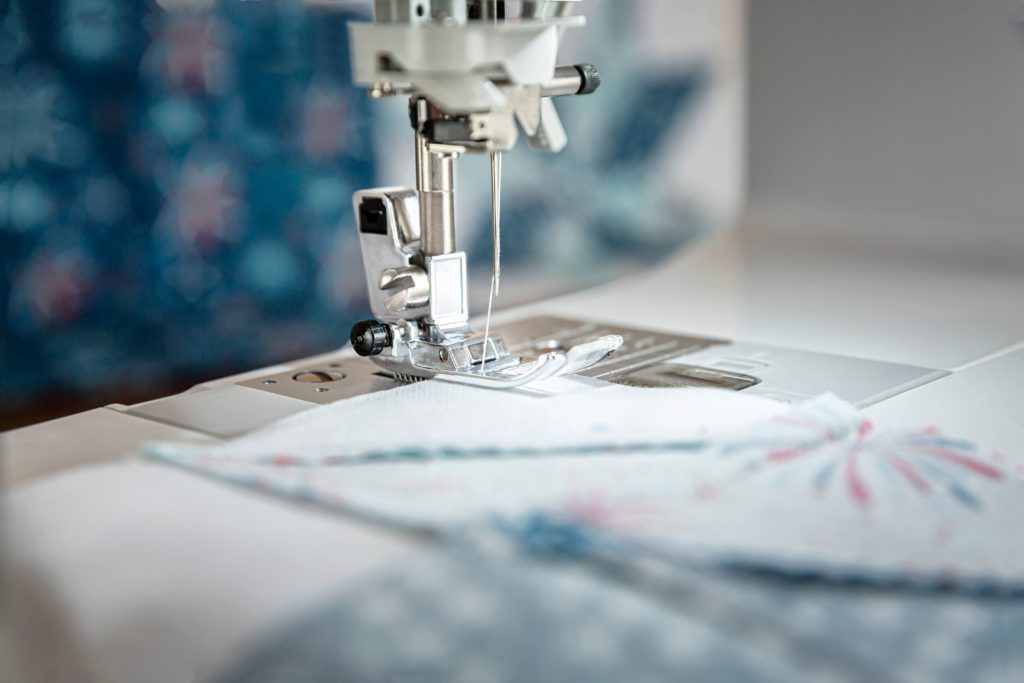
A sewing machine in action from BLOCK Magazine Volume 7 Issue 3.
If you’re interested in learning about the basics of quilting, then you’re in the right place!
Getting started with something new is usually the hardest part. Quilting can be a laborious process — it requires many steps that can seem really overwhelming when you’re new to it all! Many beginner quilters can get stuck when thinking about piecing together their first blocks, but we’re here to help! Today we’re going to be talking about the steps before you start piecing. A good foundation is the key to success, so before you dive in and start stitching up your first creation, let’s learn about the very first steps in your quilting journey!
Jenny Doan always says “finished is better than perfect” and we can’t agree more! No one will notice if you lost a point or if you had to add back fabric with an extra seam after a cutting mistake or if you had to rip out the stitches in your block one too many times with your handy seam ripper (we’ll learn more about this tool soon!). Finishing a quilt or project is a huge accomplishment and you should never let your fear of imperfection get in the way of creating! So, let’s start with the basics and build our foundation and you’ll be sewing confidently in no time!
Fabrics
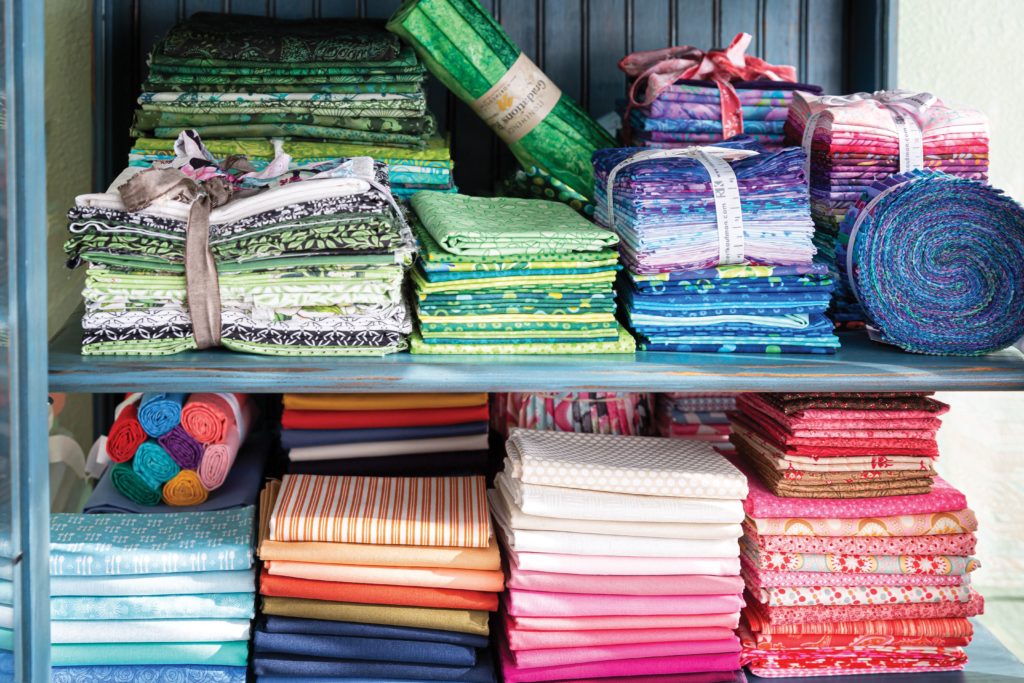
Fabric comes in all kinds of shapes, colors, cuts and styles. Photo from BLOCK Magazine Volume 7 Issue 1.
When it comes to buying fabric for your first quilt, pre-cuts are a good place to start! They come ready to go in various sizes in bundles of fabrics that coordinate with one another. If you haven’t had the chance, you can learn more about pre-cuts in our previous Building Blocks blog post. If you aren’t ready to take the leap into buying pre-cuts yet or you have other fabrics in mind for your project, have no worries! Virtually any fabric can be used for a quilting project.
The Memory quilt, for example, utilizes old neckties and shirts to create a quilt to honor a dear one’s existence. These materials are not designed for quilting projects, but with a little creative energy and ingenuity they come together to make a fantastic project that makes a truly powerful gift to honor the memory of a loved one. Old denim jeans, fabric scraps, recycled materials, t-shirts, and more can be materials used in your projects! So the next time you open your closet, keep in mind what you can repurpose to add a unique and modern touch to your quilting project.
You have many options for materials to use in your projects, but keep in mind that some materials are trickier to use than others. If you are just entering the world of sewing, we recommend choosing a material that is 100% cotton!
Cutting & Measuring
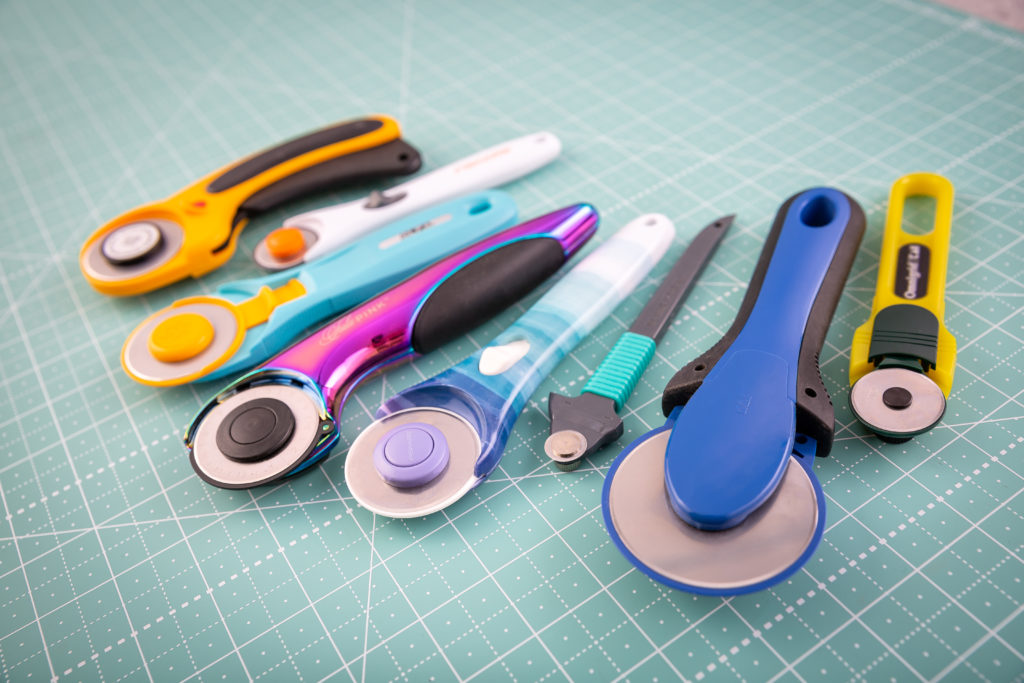
A selection of Rotary Cutters in various shapes and sizes on top of a gridded cutting mat.
Now that you are getting comfortable with choosing fabric and learning about all the choices you have, let’s talk cutting that fabric! The old adage “measure twice, cut once” has never been so pertinent. In many projects, the fabric measurements are very important to get right, so that the rest of the work goes by smoothly! Quilting can be a precise art form, so it’s best to get used to measuring out your fabrics and cutting as accurately as possible in order to get the best results. There are a few handy tools that can aid in making this process the easiest it can be!
You’ll need a rotary cutter, a cutting mat, and a ruler. Scissors are very helpful in the sewing process, but when cutting up fabric as accurately and quickly as possible, rotary cutters are our go to — especially when paired with a gridded cutting mat. These mats come blocked out in one inch squares to assist in your fabric measuring and cutting! By learning how to sandwich your fabric between your mat and ruler and using the marked, premeasured guides on those tools, you can soon become comfortable with using your rotary cutter and making as accurate cuts as you can! It takes practice, so don’t be discouraged if you make mistakes along the way. No one is a master in the beginning!
Pressing
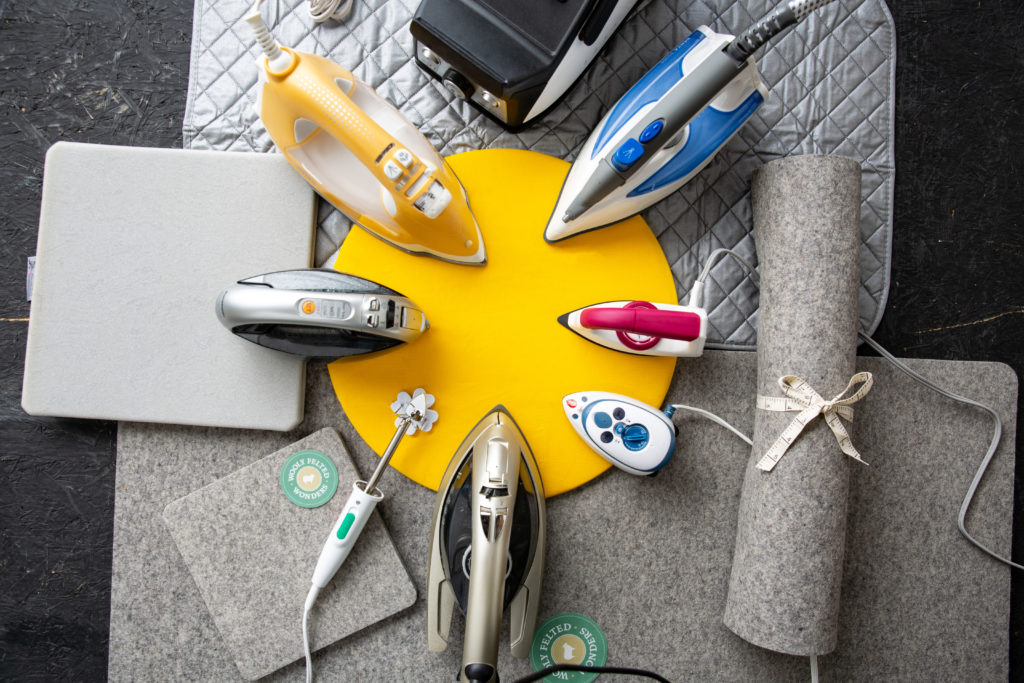
Irons and pressing mats come in a variety of styles and designs.
The last item that we suggest getting familiar with that will help in the quilting process is something that you likely already have in your house – an iron! Irons are an integral part of the entire quilting process — they are with us almost every step of the way! You may already be comfortable with the iron you have at home and if you are not, don’t fret! They usually are pretty quick to learn and may just take a little studying and practice to find the settings that work best for you. Ironing makes many steps of the quilting process easier and soon you’ll figure out how much or how little ironing you like to do during your quilting process! Everyone is a little different — some people utilize the steam feature on their iron often, some people iron every little piece, and some iron rarely. It’s all personal and a part of the learning process!
Remember to always iron on a safe surface — an ironing board is great if you have one, but if you want a space closer to your sewing area, you can always purchase an ironing mat or even make your own! You’ll be ready to press in no time and create beautiful smooth fabric that’s ready for the next step, piecing!
In our next segment, we will be talking all about piecing. Take this time to familiarize yourself with your quilting tools and measuring and cutting fabric. Remember, these basic steps, although simple, will make all the difference when creating your first quilt project. We can’t wait to see what you create!
I’ll always remember 2020 as the year we stayed home. We wore stretchy pants. We watched movies. We sewed and sewed and sewed (and sewed). And, we baked A LOT of banana bread.
Jenny’s Design
Some days were boring; some were lonely. But through it all, I’ve felt grateful for the peace and safety of these four old walls. Dorothy was right, there’s no place like home.
Natalie’s Design
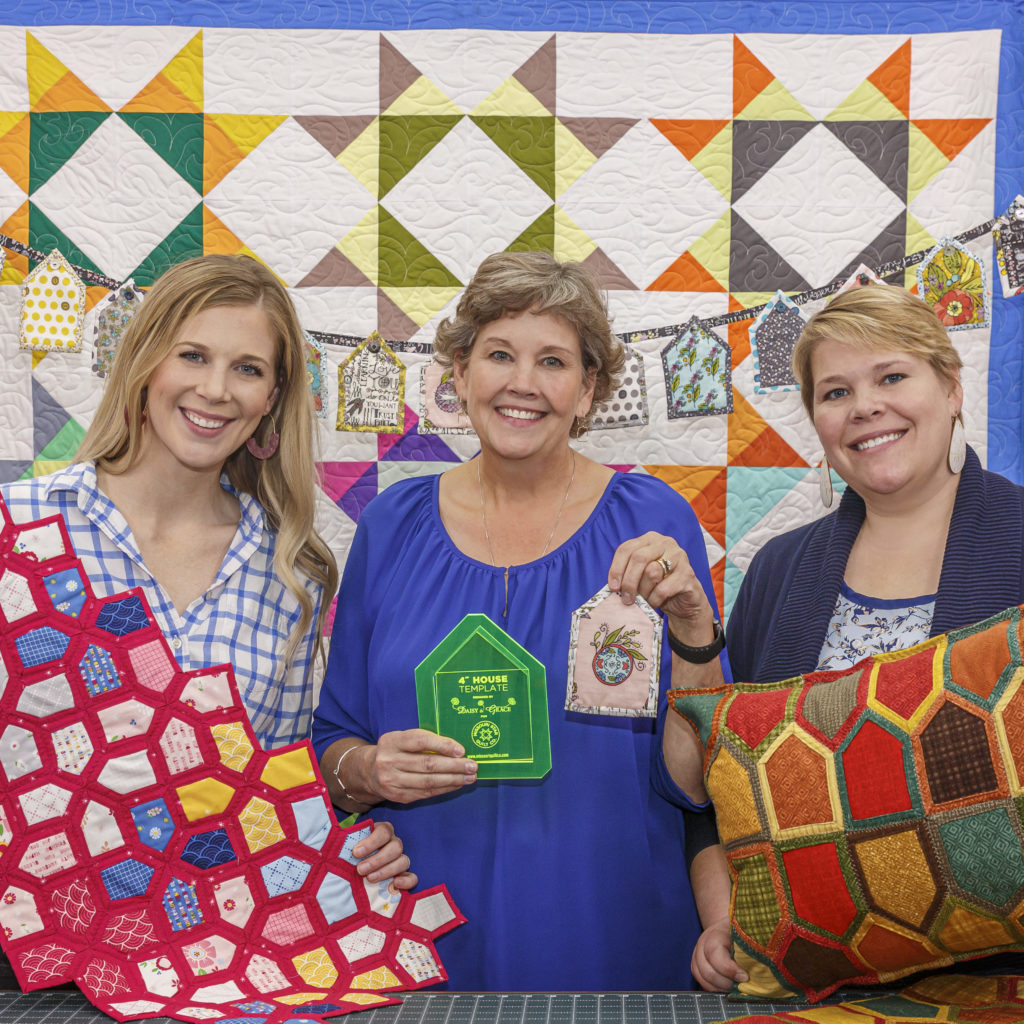
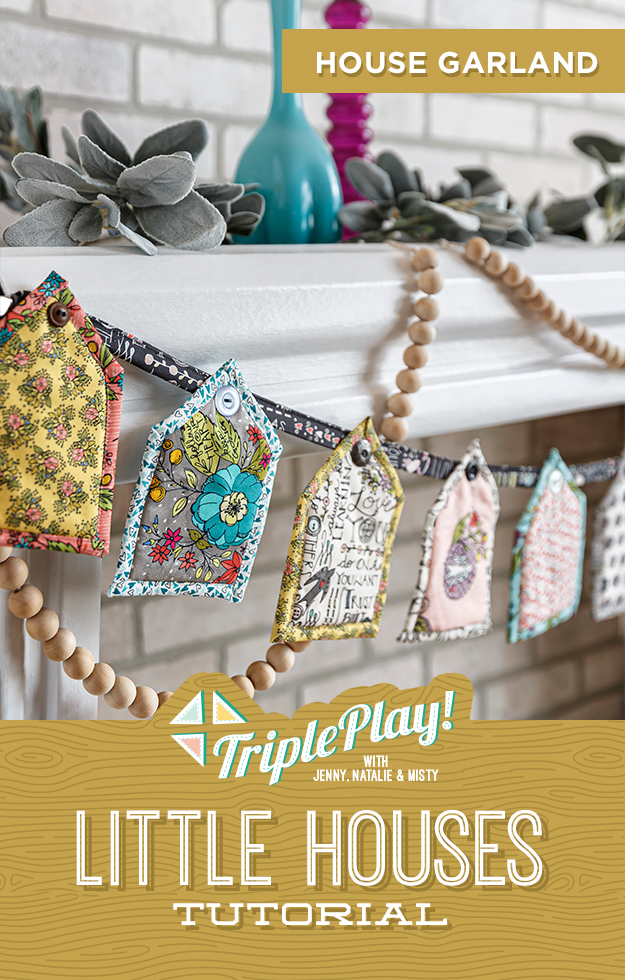
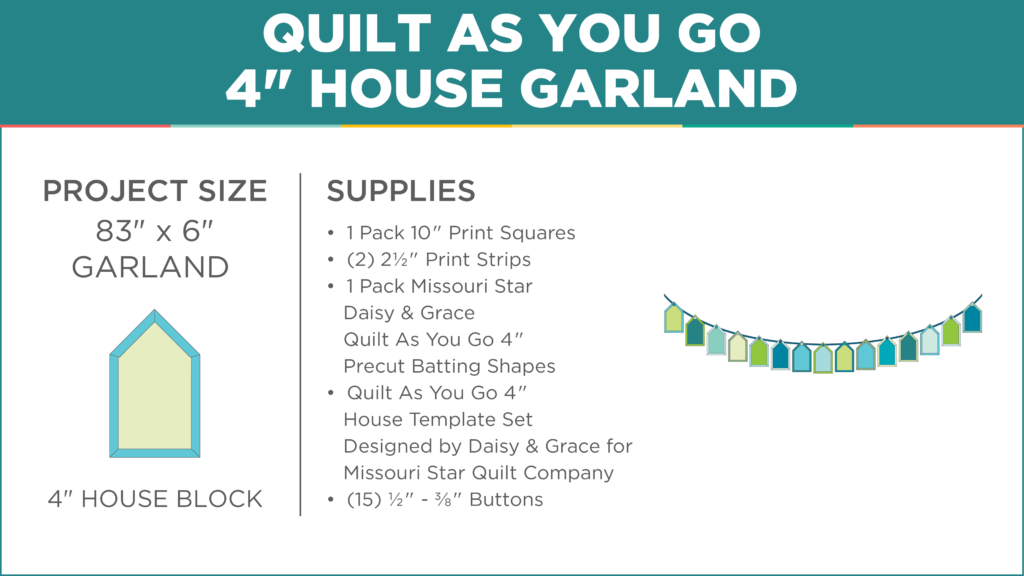
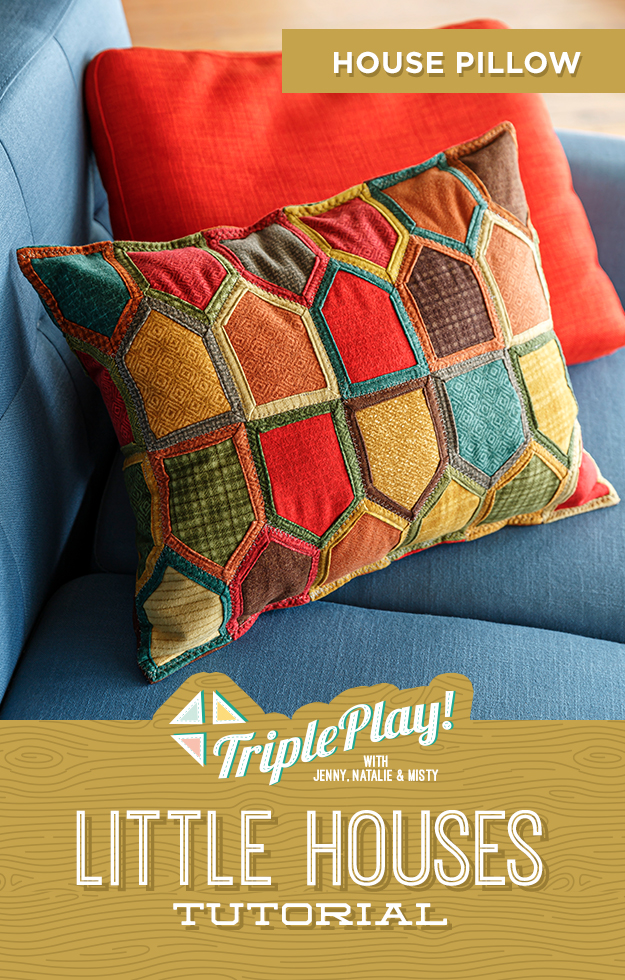
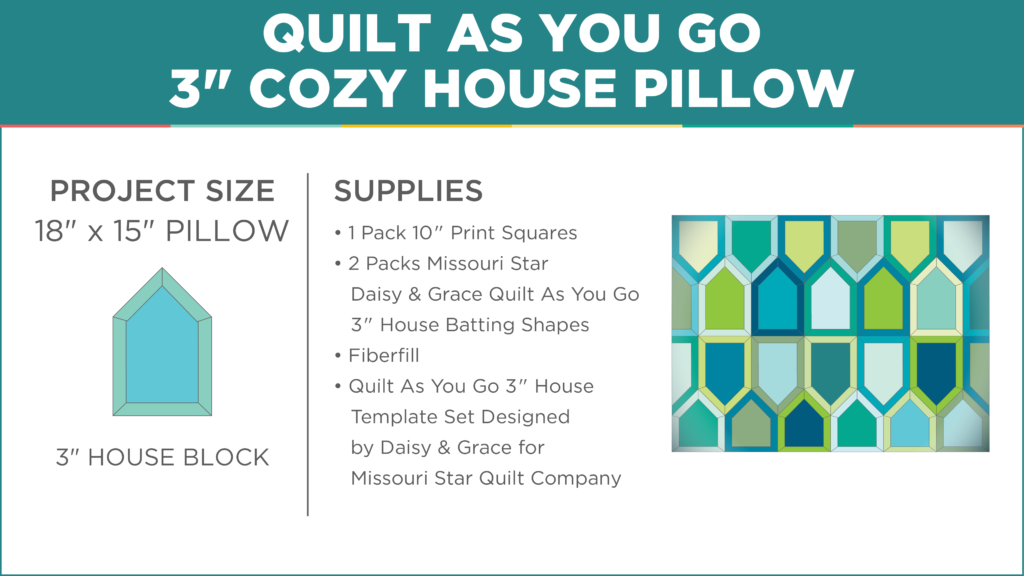
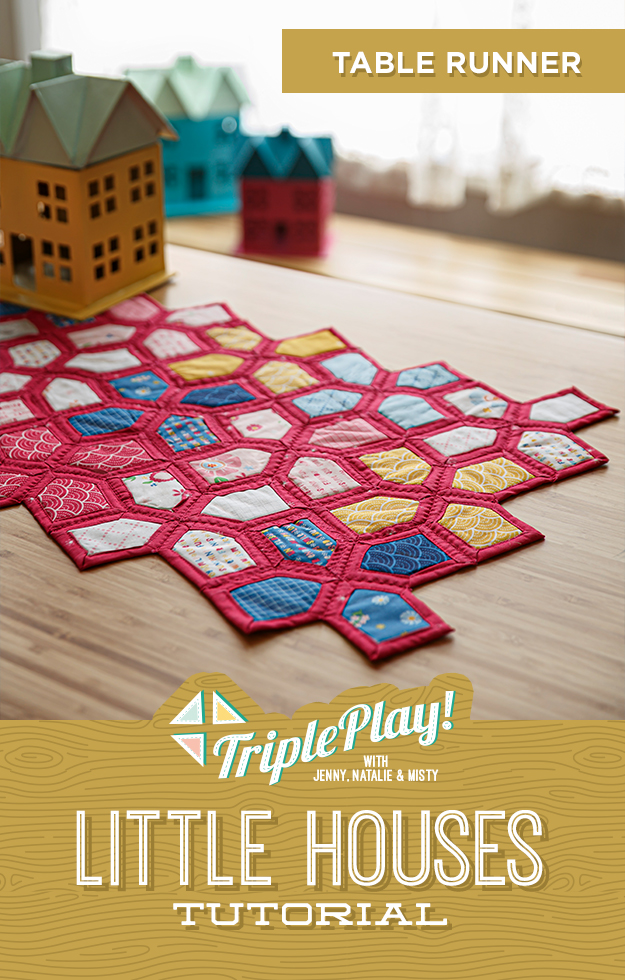
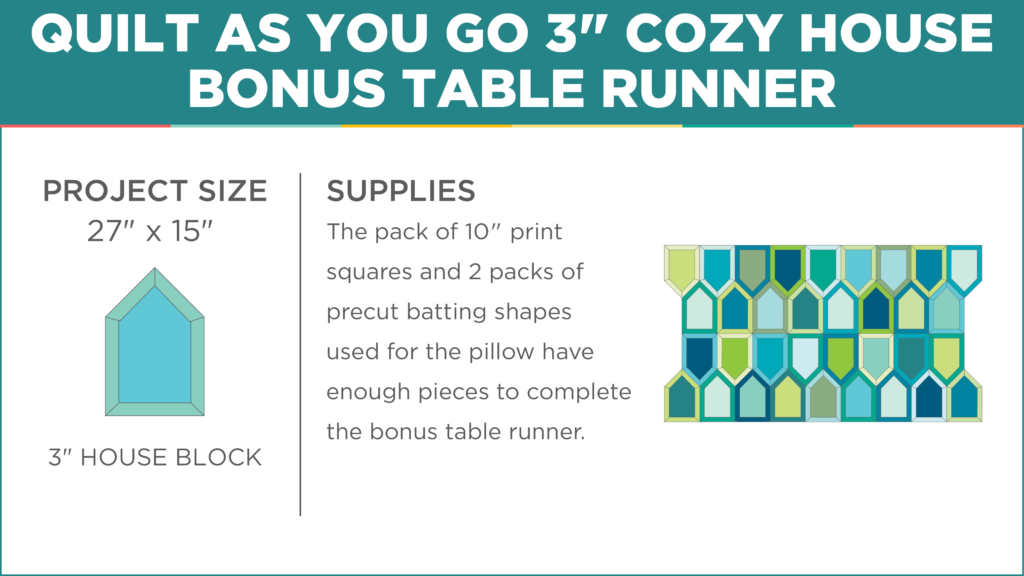
For this month’s Triple Play tutorial, Jenny and the gals used Daisy & Grace’s tiny house quilt-as-you-go templates to make a garland, a pillow, and two different table runners.
Misty’s Design
These sweet little houses can be sewn by hand or machine, and they come together easy-as-pie. Best of all, the quilt top, batting, backing, and binding are all completed in one fell swoop. Once you’re done, you’re done! Click HERE to watch the tutorial!
On cold winter nights, the sky is an icy blanket of twinkling stars. The truth is … I rarely take notice. It’s just too cold for stargazing!
But if you are willing to bundle up and brave the winter chill, you will be treated to a glittering show far brighter than any summertime stars.
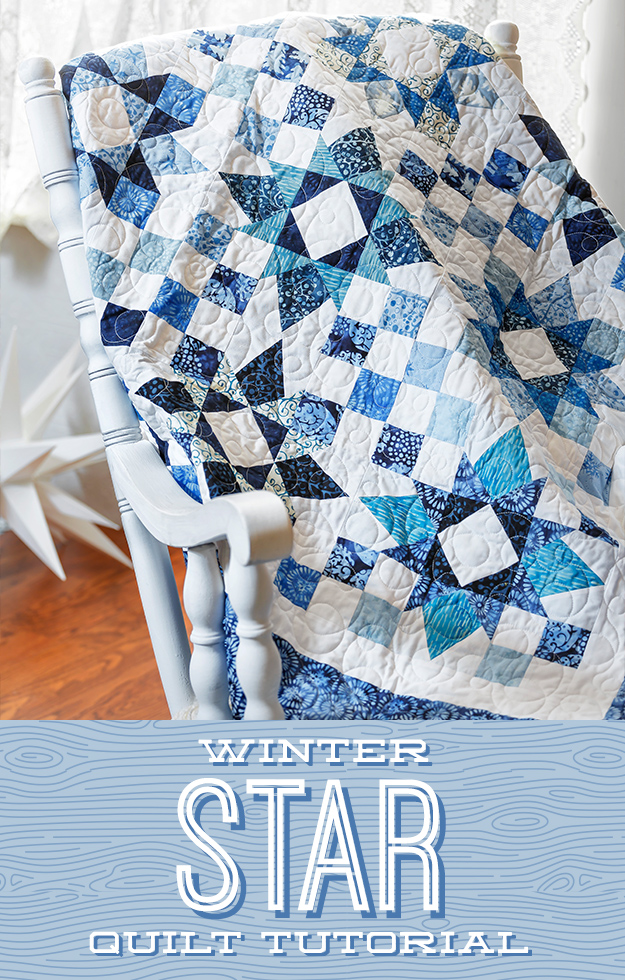
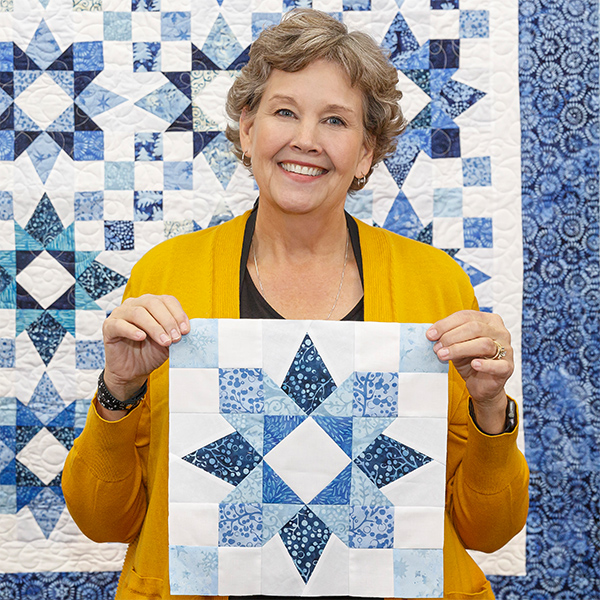
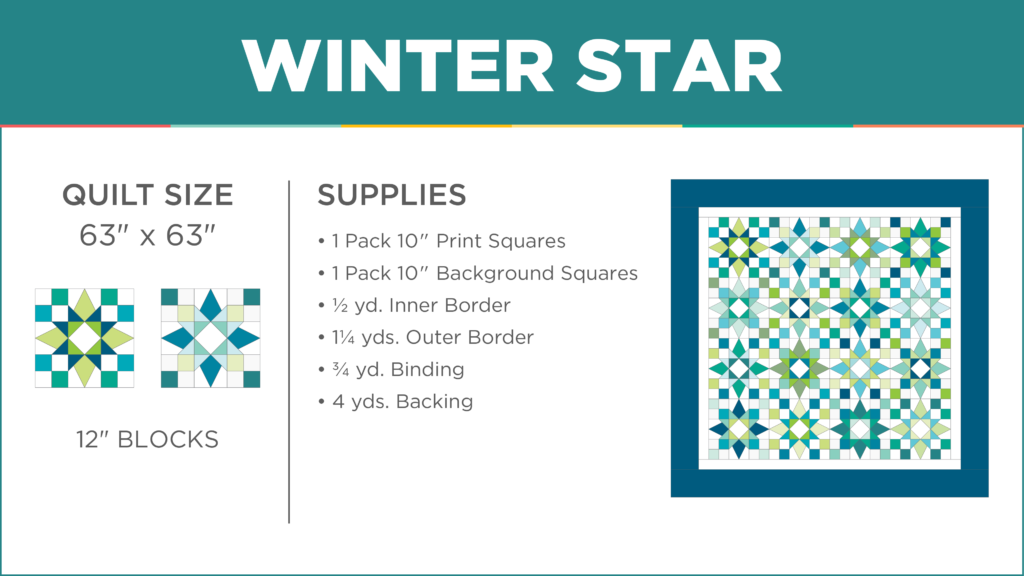
This week Jenny is whipping up a Winter Star quilt in icy shades of blue and white. This quick and easy layer cake pattern is perfect as a lap quilt or winter wall hanging.
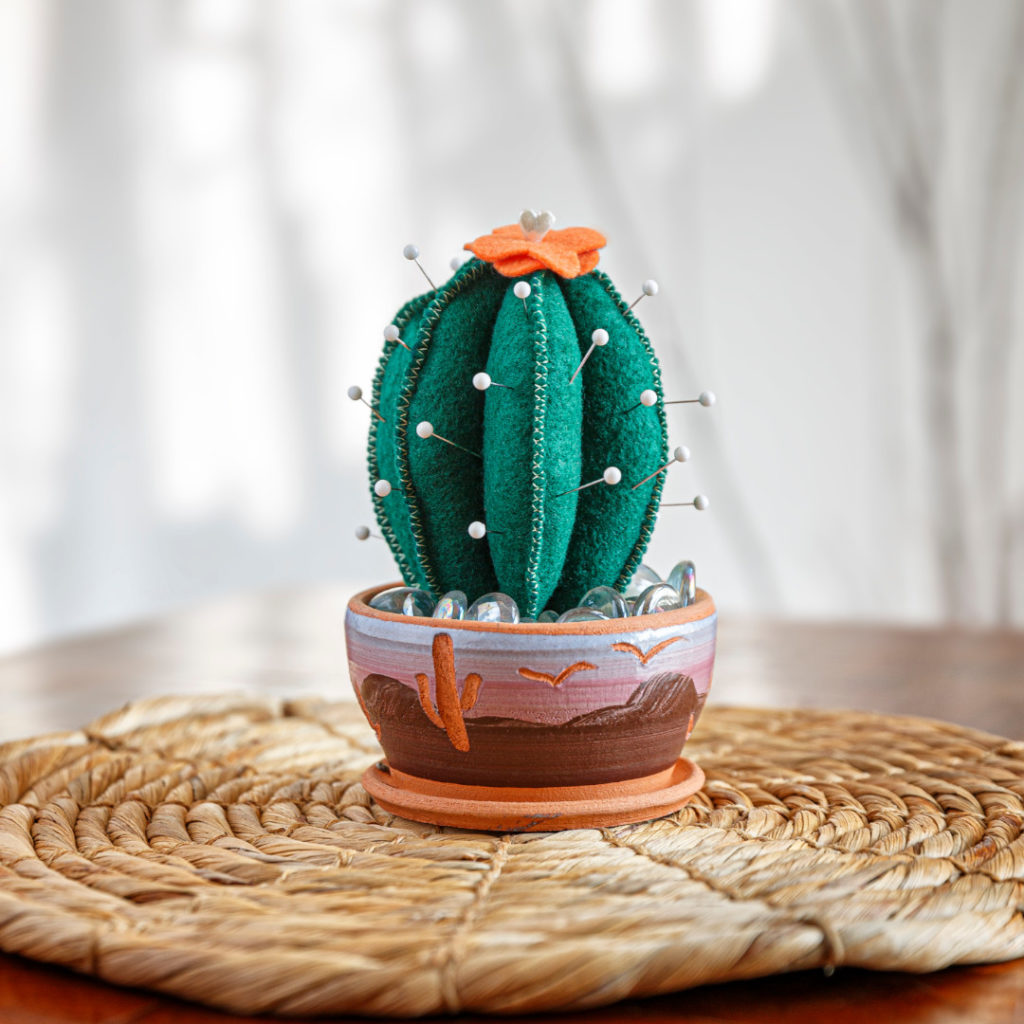
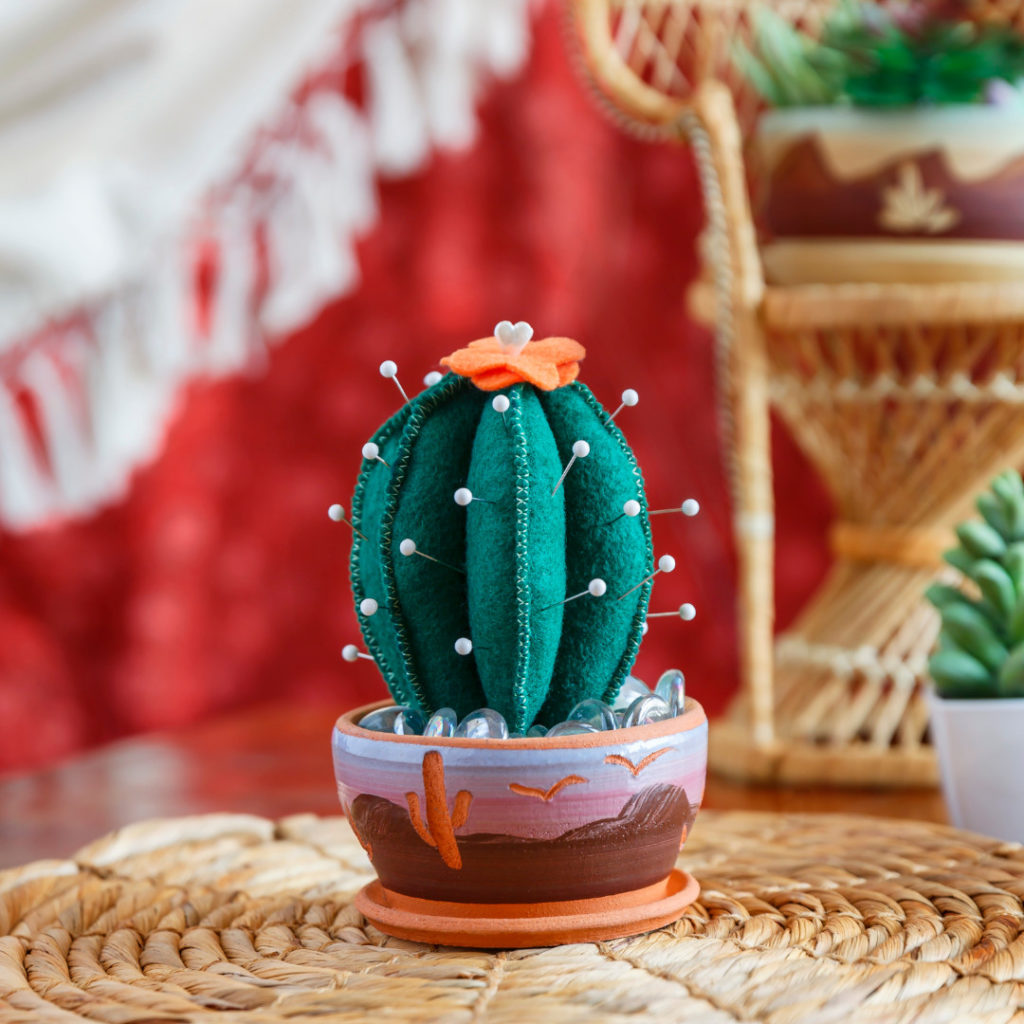
The Cactus Pincushion from Missouri Star Live displayed in a terracotta pot.
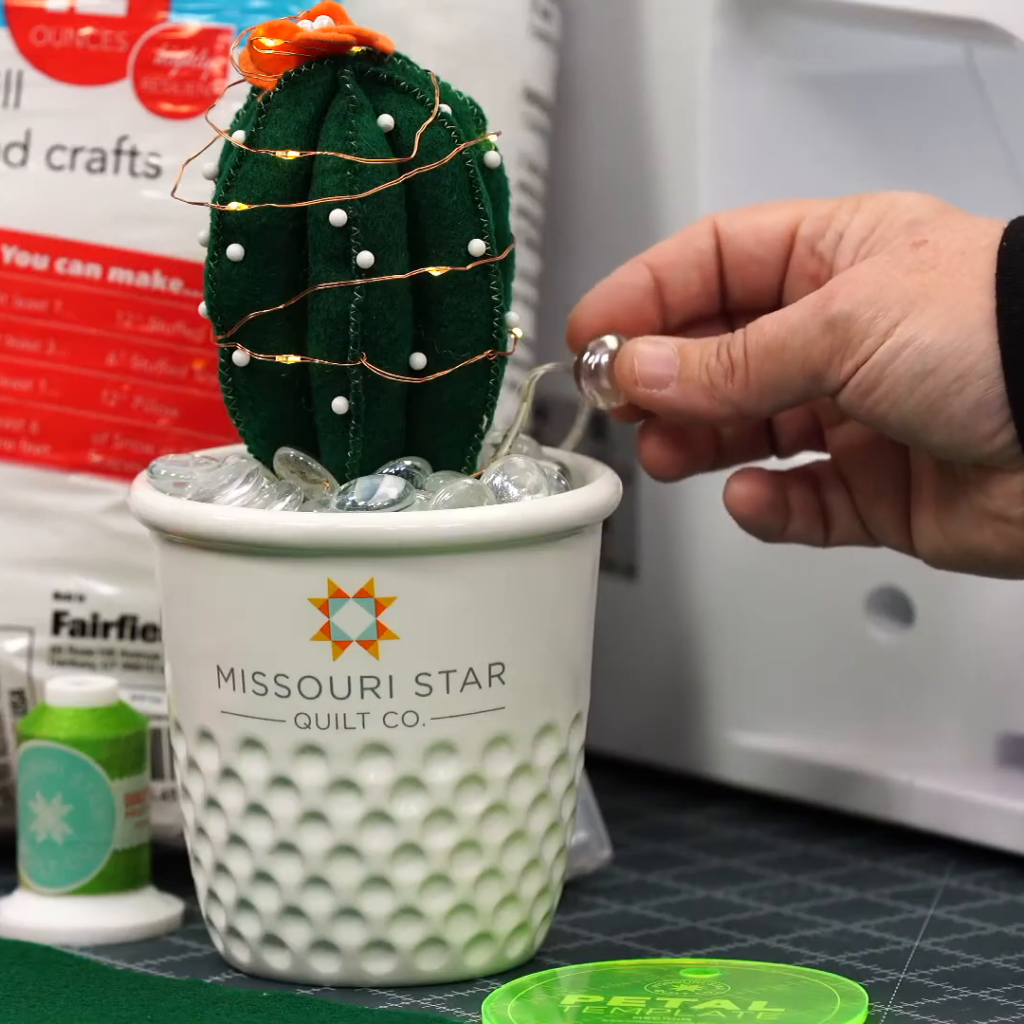
Long gone are the days of your grandmother’s red tomato pincushion! In the latest installment of Missouri Star LIVE, Courtenay demonstrates how to make a unique cactus shaped pincushion that will not only add a modern elegance to your sewing room, but will keep all of your pins safely tucked away for future use. Whether you’re “planting” your cactus pincushion in a traditional terracotta pot, or celebrating your love for Missouri Star by using a Thimble Container, this handy project is a must-have addition to your sewing studio.
Cut out the paper cactus blossom template. Use the template to trace and cut 2 cactus blossoms from the accent felt scrap. Set these aside for the moment.
Hint: Because you are sewing through layers of felt, you may need to change your needle to a larger size and sew slowly to ensure even stitching.
Lay 1 petal shape atop another, right sides out. Using a medium zigzag stitch, sew around the curved edges, leaving the bottom edge open. Repeat with pairs of the remaining petal shapes to make 3 units.
On only 1 of the sewn units, measure 1¾” from the widest point of the curved edges and mark a vertical center line.
Stack the 3 sewn units, aligning the edges, with the marked unit on top. Use Wonder Clips, binder clips, or pin as needed to hold the stack together. Sew the 3 units together along the marked center line, backstitching at the beginning and end.
Pin a fabric flower to the top of your Cactus Pincushion for a beautiful final touch.
FINISHING
Stuff each of the 6 tubes you just created with fiberfill.
Hint: The eraser end of a pencil or small dowel comes in handy to stuff the skinny tubes (Don’t forget you may find a wooden rod in your Poly-fil bag!).
Lay 1 cactus blossom atop the other at a 45° angle so that the ends of all 8 petals are visible.
Sew the blossoms together by hand, slightly gathering the top petals so they have 3 dimensions.
Sew the cactus blossom to the top of the cactus.
Cut the styrofoam cube as needed to fit inside the thimble container. Use the glue to adhere the sytrofoam to the inside of the pot. Use additional glue to adhere the cactus to the top of the styrofoam. You can fill the pot around the styrofoam with aquarium rock or even glue some rocks around the base of the cactus to finish “planting” your cactus.
Stick in some of your favorite pins and your cactus pincushion is sure to prickle your fancy!
Needing some more help? Download our Free Printable Pattern or Join Missouri Star’s very own Courtenay Hughes as she demonstrates how to create this adorable, quick and easy project on the replay of Missouri Star LIVE!